Finding what you cannot see
Waking up to a mystery puddle or a skyrocketing water bill is incredibly stressful. We know exactly how frustrating it feels to suspect a hidden plumbing problem in your Imperial Valley home, and our El Centro plumbers track these down every week.
Hidden leaks behind walls, under concrete slabs, and in underground supply lines are the most expensive plumbing issue you can face. Our expert Leak Detection & Slab Leak Repair technicians see these invisible threats cause massive damage before the first visible symptom even appears.
The Environmental Protection Agency notes that an average household leak can waste up to 10,000 gallons of water every year. You need to watch out for four specific warning signs in your home.
- A sudden jump in your monthly water bill with zero change in your daily usage.
- A localized warm spot on the tile or laminate floor, indicating a hot water line breach.
- The distinct sound of running water when every single fixture is firmly shut off.
- Unexplained dampness along exterior stucco or water pooling near interior baseboards.
Any one of those symptoms absolutely warrants a thorough meter check. We highly recommend shutting off every fixture and checking your water meter’s low-flow indicator triangle.
If that little dial is still spinning, water is actively escaping somewhere in your property.
Where valley leaks come from
Local geography and water quality play a massive role in plumbing failures. The plumber consistently find that specific environmental factors in El Centro cause the vast majority of pipe damage.
The Imperial Irrigation District supplies very hard water, often measuring around 20 grains per gallon. This excessive mineral content wreaks havoc on older plumbing systems over time.
These are the most common culprits behind property water damage:
- Shifting soil: Heavy Imperial clay and caliche expand rapidly with moisture. This soil presses forcefully against buried drain and supply lines, causing them to eventually crack.
- Hard water on copper: Two decades of highly mineralized water moving through copper pipes produces heavy pitting. That internal pitting eventually creates multiple pinhole leaks that ruin walls.
- Aging galvanized pipes: Central El Centro homes built before 1970 still carry a lot of original galvanized steel supply lines. These pipes corrode inward, severely choking off your water pressure everywhere at once.
- Polybutylene plastic: Builders installed this gray plastic piping widely in the 1980s and early 1990s. The material is notorious for sudden catastrophic failures at the plastic fittings and usually requires a full repipe conversation.
- Construction-era defects: Newer subdivisions usually avoid corrosion issues but suffer from sloppy installation. Missing P-traps and unsealed vent penetrations are incredibly common finds that cause long-term issues.
How we locate a leak
Guesswork has absolutely no place in modern plumbing repair. We always confirm the leak exists first before locating the exact source point.
A basic meter check and a pressure test tell the technician if the breach is on the supply side or the drain side. This single diagnostic step prevents unnecessary demolition and wasted hourly labor.
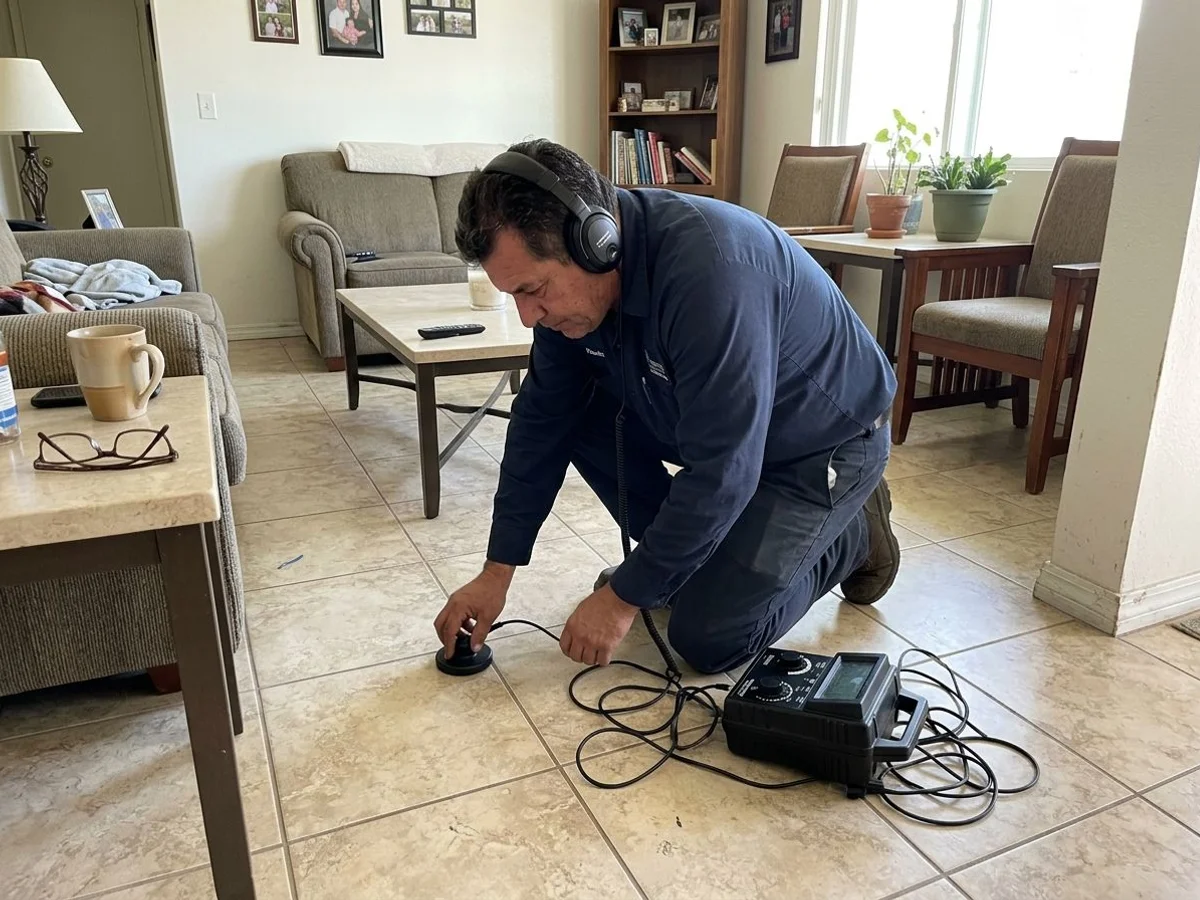
Plumbers in this market use three distinct technologies to pinpoint the exact failure location.
| Detection Technology | How It Works | Best Used For |
|---|---|---|
| Fisher Acoustic Discs | Amplifies the sound of escaping pressurized water. | Finding hidden leaks under thick concrete slabs. |
| FLIR Thermal Imaging | Detects minute surface temperature changes (up to 0.05°C). | Locating hot water line leaks under hard flooring. |
| Electromagnetic Tracing | Follows an induced signal along a metallic pipe path. | Mapping out buried utility lines before digging. |
The technician opens the concrete at the specifically located spot and nowhere else. We want to keep your property as pristine as possible during a stressful repair.
The difference between proper diagnostic locating and blind demolition is massive. A targeted approach means making one small access cut instead of tearing up an entire hallway of expensive tile.
Sewer gas and smoke testing
A persistent sewage odor inside your living room means dangerous hydrogen sulfide gas is escaping your drain system. We take these invisible airborne leaks just as seriously as a burst water pipe.
These hazardous situations rarely involve a wet spot, making them notoriously tricky to track down visually. Smoke testing solves this mystery by pushing a specialized, non-toxic fog through your entire plumbing vent system under low pressure.
Wherever the plumbing system is open to the interior space, the fog visibly escapes to show the technician the exact breach. The team frequently uses professional-grade liquid smoke because it leaves absolutely zero residue on your walls or furniture.
“A standard smoke test can save a homeowner thousands of dollars by identifying a simple failed seal instead of requiring a complete wall teardown.”
This diagnostic process quickly reveals several common unseen hazards in a single pass:
- Missing or completely dried-out P-traps under guest bathroom sinks.
- Unsealed vent pipe penetrations hidden neatly behind drywall.
- Cracked PVC drain lines resting silently inside wall cavities.
- Failed wax rings or broken closet flanges sitting under toilets.
These missing or dry traps are an incredibly common find in newer construction projects. The original builder skips a crucial step during the construction rush, and nobody notices the missing piece for years.
When repiping beats patching
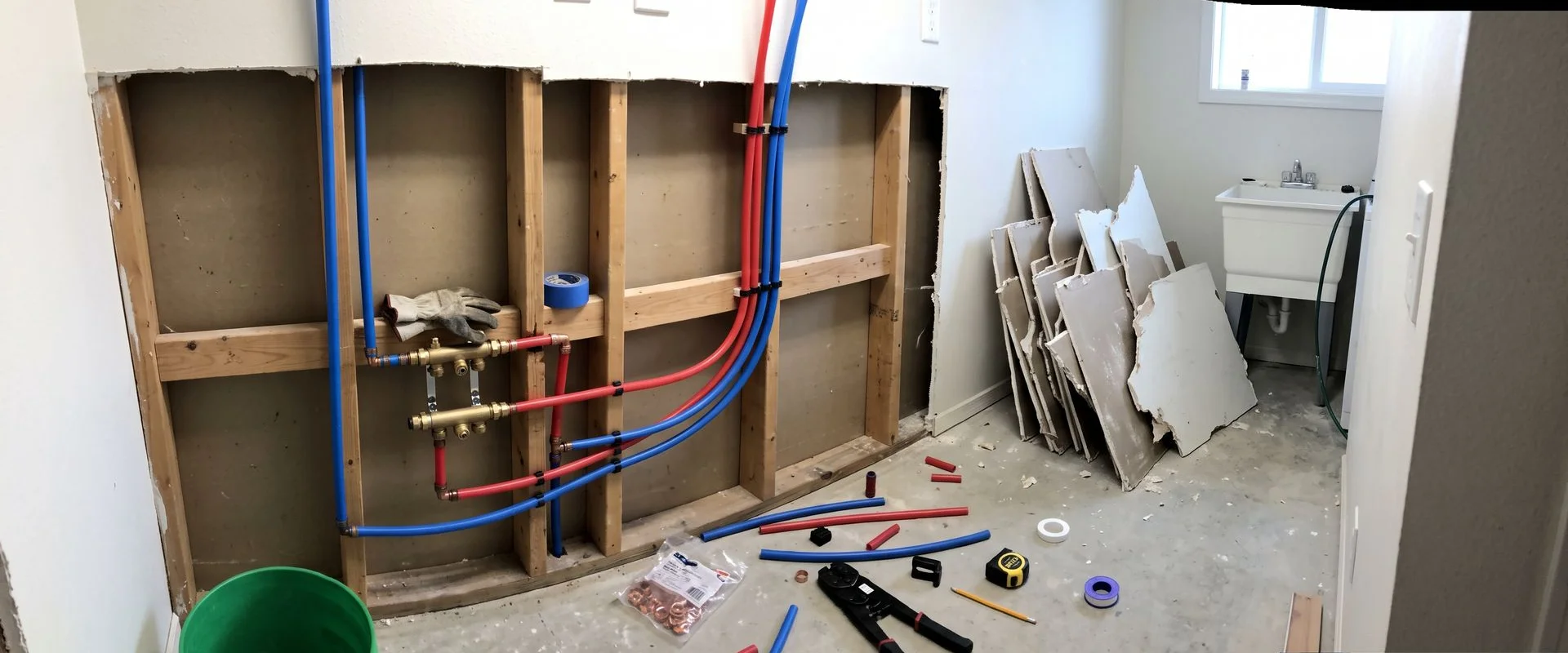
Homeowners eventually reach a point where individual spot repairs simply stop making financial sense. We advise clients to look at the entire plumbing system when failures become a recurring monthly expense.
Certain specific symptoms indicate that the actual pipe material is failing, rather than a single joint or valve. You should consider a full replacement if you notice low pressure throughout the entire house or rust-colored water every morning.
Once pinhole leaks start erupting in multiple different rooms, patching them is just a temporary bandage.
| Piping Material | Key Benefits | Best Application |
|---|---|---|
| PEX-A Plastic | Highly flexible, resists hard water scale, much faster to install. | Whole-house repipes in hard water regions. |
| L-Grade Copper | Extremely durable, naturally bacteriostatic, long proven track record. | Homes with water softeners or exposed exterior pipe runs. |
At that advanced stage of failure, the smartest move is to completely remove the aging galvanized, polybutylene, or severely corroded copper systems. The plumber usually recommend cross-linked polyethylene, commonly known as PEX, as the most practical and cost-effective choice for modern replacements.
This highly flexible tubing snakes through walls much faster, requiring significantly fewer drywall cuts. Modern PEX is also completely immune to the destructive pitting that hard El Centro water causes in standard copper.
Traditional copper piping still remains a fantastic option where the structural layout heavily favors rigid lines. We rigorously pressure test every single new joint and re-check the main water meter before closing up your walls.
The complete system leak and repiping guides go deeper on how to tell which situation you are facing. You deserve total peace of mind before making a major investment in your home.