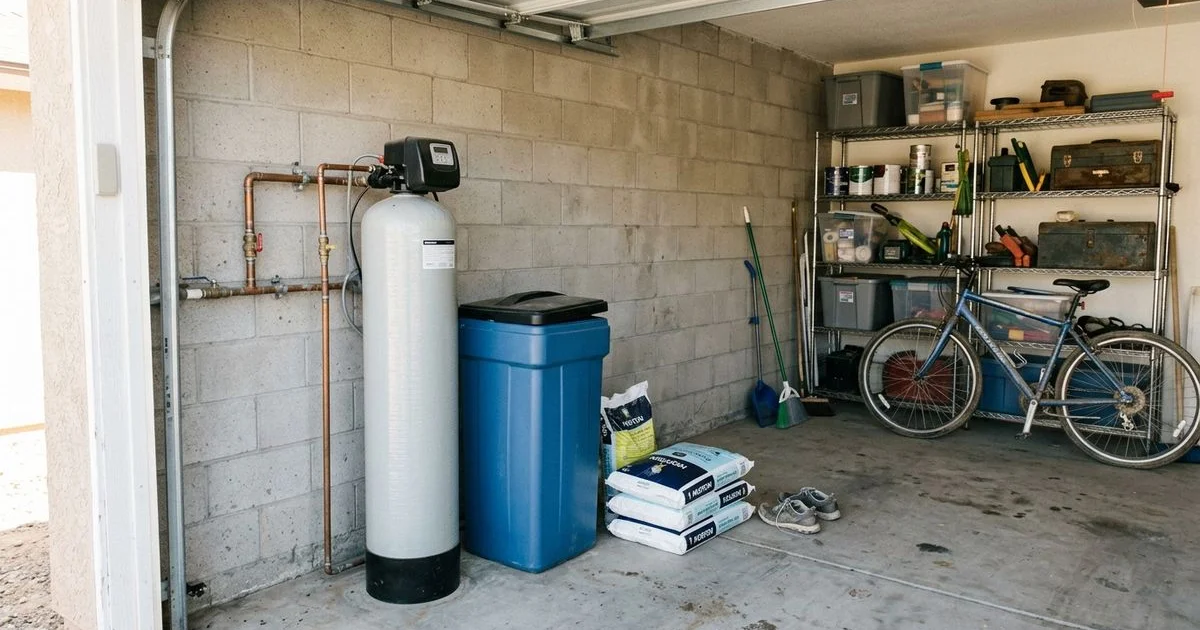
The plumber see the damage hard water causes across the Imperial Valley every single week. The culprit is usually an undersized water softener that failed to handle the local mineral load. Finding out what size water softener do i need is the critical first step to protecting your home.
We will walk you through the sizing math and outline the exact steps for choosing a unit that lasts. These practical facts make the decision clear and straightforward. The data tells a very specific story about local water conditions.
The sizing math, in plain terms
The plumber handle water softener sizing by matching your household usage to the incoming mineral levels. The grain capacity softener rating represents the total amount of hardness the resin can remove before regenerating. This number must align perfectly with your daily consumption.
We evaluate three specific factors to find your baseline capacity:
- The first factor is the number of people in your house. Current 2026 data from the EPA shows the average American uses 82 gallons of water per day.
- Our regional tests verify the actual water hardness. While old charts say 20 grains per gallon, El Centro water frequently hits 28 to 36 grains per gallon.
- The final factor is the days between regenerations. We target three days as the ideal regeneration schedule.
A simple math formula brings these numbers together. A four-person household using 82 gallons daily consumes 328 gallons a day.
Our math shows that at 20 grains per gallon, the home creates 6,560 grains of hardness daily. Over three days, the total reaches 19,680 grains. A softener never delivers its full nominal rating efficiently.
We typically place a household like this in a 32,000 or 40,000-grain unit. The final calculation requires adjusting for reality. Long showers, a big family, frequent laundry, or a pool will all raise usage.
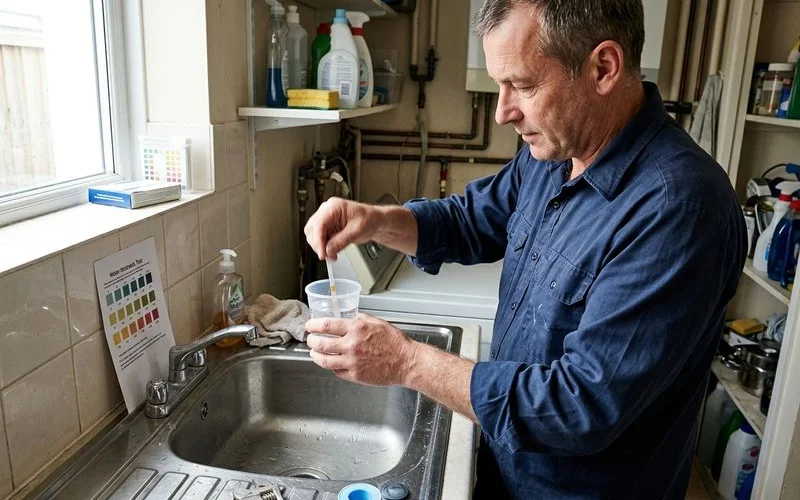
We test your water and ask about your routines instead of just handing you a chart. A large family naturally puts more stress on a plumbing system. A household of two that travels often simply needs less capacity.
Rough starting points for valley homes
Our sizing chart provides a basic estimate for homes in the Imperial Valley. These numbers represent common starting points for different family sizes. The daily hardness load dictates the required capacity.
| Household | Daily hardness load | Common capacity |
|---|---|---|
| 1 to 2 people | ~3,000 grains | 24,000 grains |
| 3 to 4 people | ~6,000 grains | 32,000 to 40,000 grains |
| 5 to 6 people | ~9,000 grains | 48,000 grains |
| Large or high-use | 10,000+ grains | 64,000 grains or twin tank |
We must emphasize that these figures are estimates, not final answers. Actual measured hardness at your tap will shift the recommendation. Real usage habits and the presence of a tankless water heater downstream also change the math.
Our water softeners and reverse osmosis service starts with a physical test at your fixture, not a table. Hard water destroys tankless heaters extremely fast. A properly sized system prevents this expensive damage.
Why getting it wrong costs more here
The team sees the financial impact of incorrect sizing every single day. A mistake in capacity calculation leads directly to expensive plumbing failures. The problems fall into two distinct categories based on the specific error.
We created this comparison to show the exact consequences of poor sizing. Both scenarios cost you money, but in very different ways. The data clearly highlights why accuracy matters.
| Sizing Error | Financial and Mechanical Impact |
|---|---|
| Undersized Units | Undersized systems are a common repair call in this region. This unit exhausts its capacity before the next scheduled regeneration. Hard water then passes through untreated, and the system burns salt by regenerating too often. |
| Oversized Units | We also find oversized systems wasting money. You pay for capacity you never use. Resin sitting for long periods degrades, and the unit takes much more salt per cycle. |
We consider a sizing mistake a minor nuisance in soft-water regions. At roughly 20 grains per gallon, an undersized unit fails to protect your appliances. The national average cost to replace a gas water heater in 2026 sits around $2,000, while tankless models average $4,250.
Our priority is protecting that massive investment from scale buildup. A properly sized softener acts as an insurance policy for your plumbing. The signs of failure are usually quite obvious.
The tell
We advise homeowners to listen to their equipment at night. If your softener regenerates every single night, it is mathematically undersized for your household. That detail is worth checking on any system you inherited with a house.
Regeneration, briefly
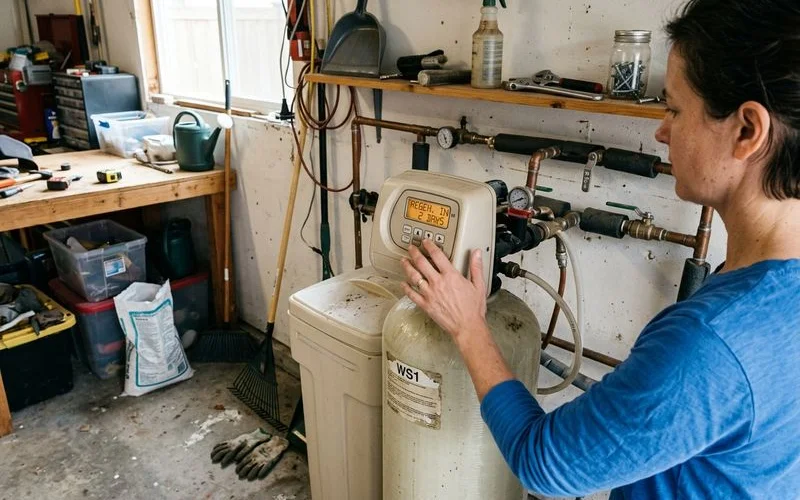
A standard installation process always accounts for how the system handles regeneration. Regeneration is the cycle where the resin bed is flushed with brine. This process releases the captured hardness minerals and recharges the bed for the next run.
We strongly prefer to install specific control valves for local homes. The two main types of systems operate very differently:
- The first option is a metered unit that regenerates based on actual water used.
- We avoid timer units because they regenerate on a fixed schedule regardless of actual need.
- Those rigid systems run short on heavy-use weeks, allowing hard water into the pipes.
- A timer system also wastes salt during light-use weeks.
We schedule the entire cycle to run for about an hour and a half overnight. The unit bypasses the house during this time, delivering untreated water briefly. Proper timing ensures nobody notices the hard water.
Salt use, realistically
Our customers consistently use more salt than the national brochure numbers suggest. The extreme local hardness requires the system to exchange more minerals per gallon. Most households top up the brine tank every few weeks.
We want you to know this real ongoing cost up front. A standard 40-pound bag of water softener salt costs around $5 to $10 in 2026. An active El Centro family might go through several bags a month during peak summer usage.
Planning for maintenance
The team understands this expense is the main practical argument people raise against softening. The salt cost is worth weighing against what untreated water does, which is covered in detail in our guide on is a water softener worth it. Equipment placement plays a massive role in long-term maintenance.
We always recommend putting the brine tank somewhere easily accessible. You need to reach it with a heavy 40-pound bag without moving the car. This small detail decides whether the unit actually gets maintained.
Our final piece of advice is to avoid guessing your grain capacity. A professional water test provides the exact data needed for a perfect fit.
Figuring out what size water softener do i need will save you thousands of dollars on plumbing repairs.
We are ready to help you evaluate your specific water usage today. Call our experienced El Centro plumbers to schedule a comprehensive hardness test. This simple step secures the lifespan of your entire plumbing system.